ACL Avulsion Care, Built Around Stability.
When the ACL pulls away from its attachment—sometimes with a small bone fragment—timely assessment can protect knee movement, stability and long-term function.
What Is ACL Avulsion?
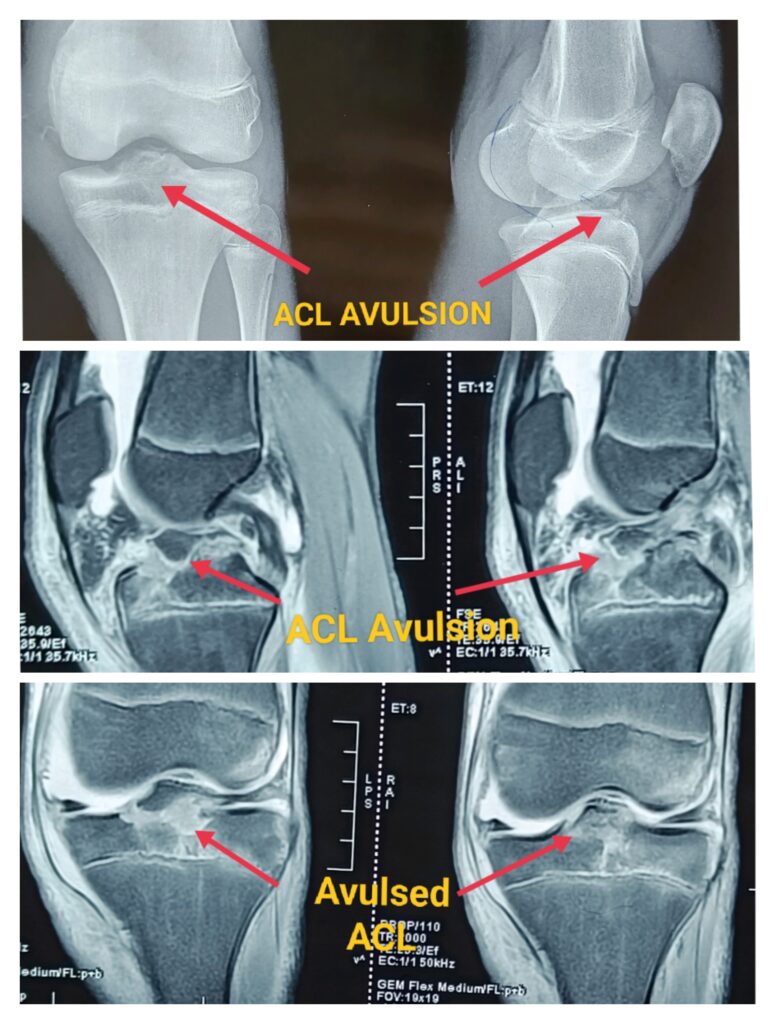
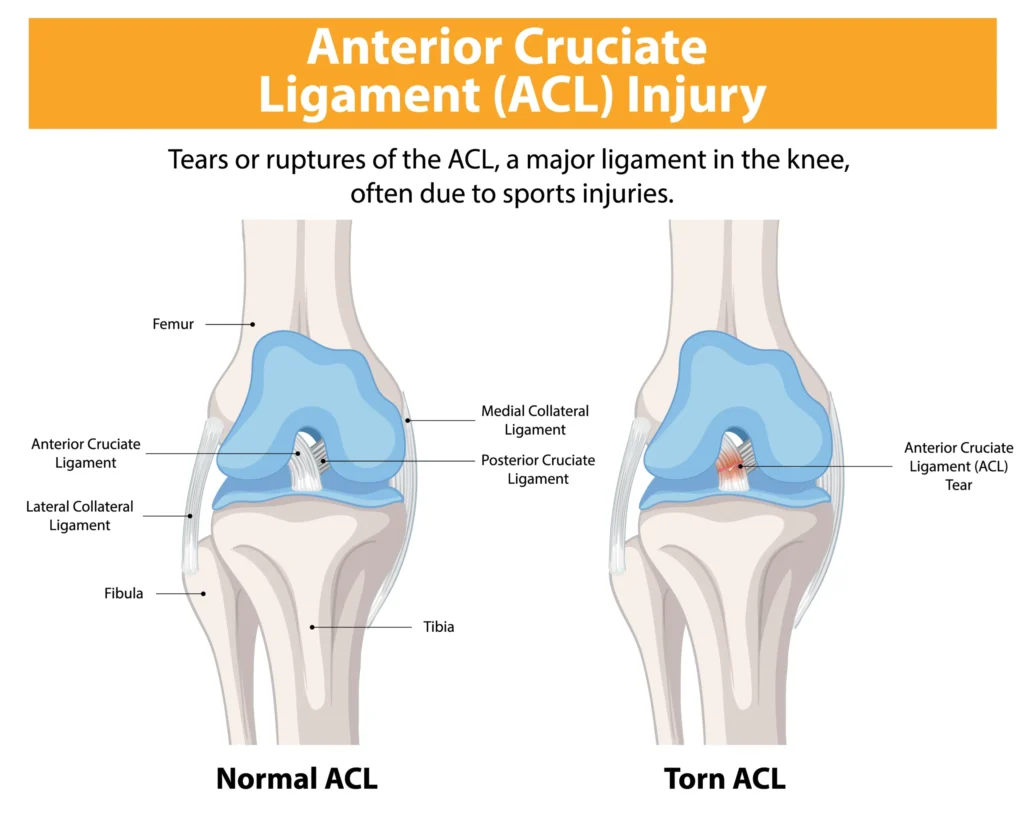
ACL avulsion occurs when the Anterior Cruciate Ligament is pulled away from its normal attachment. In a tibial eminence avulsion fracture, the ligament may take a small piece of bone with it. It is seen more commonly in younger patients after sports injuries, falls, road accidents or other high-impact trauma.
Fragment displacement can affect knee extension and stability. Imaging helps determine whether protection and rehabilitation are suitable or whether fixation is needed.
Causes & Warning Signs
Symptoms vary with the size and displacement of the fragment and associated knee injuries.
Twisting & Direction Change
Sports movements that rapidly rotate or load the knee.
Jumping & Landing
An awkward landing can place sudden stress on the ACL attachment.
Falls & Road Trauma
Two-wheeler accidents and high-impact injuries are common causes.
Pain & Swelling
Sudden pain, swelling and difficulty bearing weight after injury.
Restricted Movement
Difficulty fully bending or straightening the knee; occasional locking.
Instability
A giving-way sensation or difficulty walking and running safely.
Diagnosis Before Treatment
Clinical Examination
The orthopedic surgeon assesses swelling, range of motion, knee stability and possible associated meniscus or cartilage injuries.
X-Ray & MRI
X-ray can reveal the avulsed bone fragment. MRI evaluates the ACL, fragment position, meniscus, cartilage and other soft-tissue structures.
Non-Surgical Care or Fixation?
The decision depends on age, displacement, stability, movement restriction, imaging findings and associated injuries.
Selected Non-Surgical Care
May be considered for minimally displaced injuries with acceptable stability.
- Knee protection or immobilization
- Activity modification
- Gradual restoration of movement
- Muscle strengthening
- Regular clinical and imaging follow-up
Arthroscopic Reduction & Fixation
May be advised when the fragment is displaced, the knee remains unstable, movement is blocked or reliable healing is unlikely without surgery.
- Arthroscopic assessment of the joint
- Reduction of the avulsed fragment
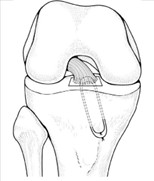
- Fixation to restore ACL attachment
- Evaluation of associated knee injuries
- Structured post-operative rehabilitation
ACL Avulsion vs ACL Tear
| ACL Avulsion | ACL Tear |
|---|---|
| ACL pulls away from its attachment | ACL fibres partially or completely rupture |
| May include an attached bone fragment | Usually a ligament-fibre injury |
| Often linked to tibial eminence injuries in younger patients | Common after sports twisting injuries |
| X-ray may show the fragment | MRI commonly assesses the torn ligament |
| Treatment depends on displacement and stability | Treatment depends on tear pattern, instability and activity |
Progressive Return to Function
Recovery timelines differ. Progress is guided by healing, movement, strength and stability—not time alone.
Protect & Control
Protect healing tissue, manage swelling and follow movement precautions.
Restore Movement
Gradual knee range of motion and normalization of walking.
Build Strength
Progressive quadriceps, hamstring, balance and coordination work.
Function & Sport
Activity resumes after clinical assessment of stability and readiness.

Dr. Hitesh Mangal
Orthopedic Surgeon with expertise in arthroscopy and sports injuries at Durva Hospital, Kota. Each plan is based on age, injury pattern, imaging, activity level and knee stability.
ACL Avulsion FAQs
Is ACL avulsion the same as an ACL tear?
No. In an avulsion injury, the ACL is pulled away from its attachment and may carry a bone fragment. In a typical tear, the ligament fibres rupture.
Can ACL avulsion heal without surgery?
Selected minimally displaced injuries with acceptable stability may be managed without surgery. The decision requires clinical and imaging assessment.
When is surgery considered?
Surgery may be advised for significant displacement, instability, blocked movement or when satisfactory healing is unlikely with conservative care.
Why are both X-ray and MRI used?
X-ray helps identify the bone fragment, while MRI assesses the ACL and associated meniscus, cartilage and soft-tissue injuries.
When can I return to sports?
Return depends on healing, knee movement, strength, balance and functional stability. Your surgeon and rehabilitation team should guide the timing.
Persistent swelling or an unstable knee?
Early orthopedic evaluation can clarify the injury and the safest treatment path.